E-Commerce Brand Generates $294,871.93 in Tracked Purchase Value Through Paid Social
How a performance creative system helped scale purchases, improve campaign efficiency, and turn ad spend into measurable revenue.
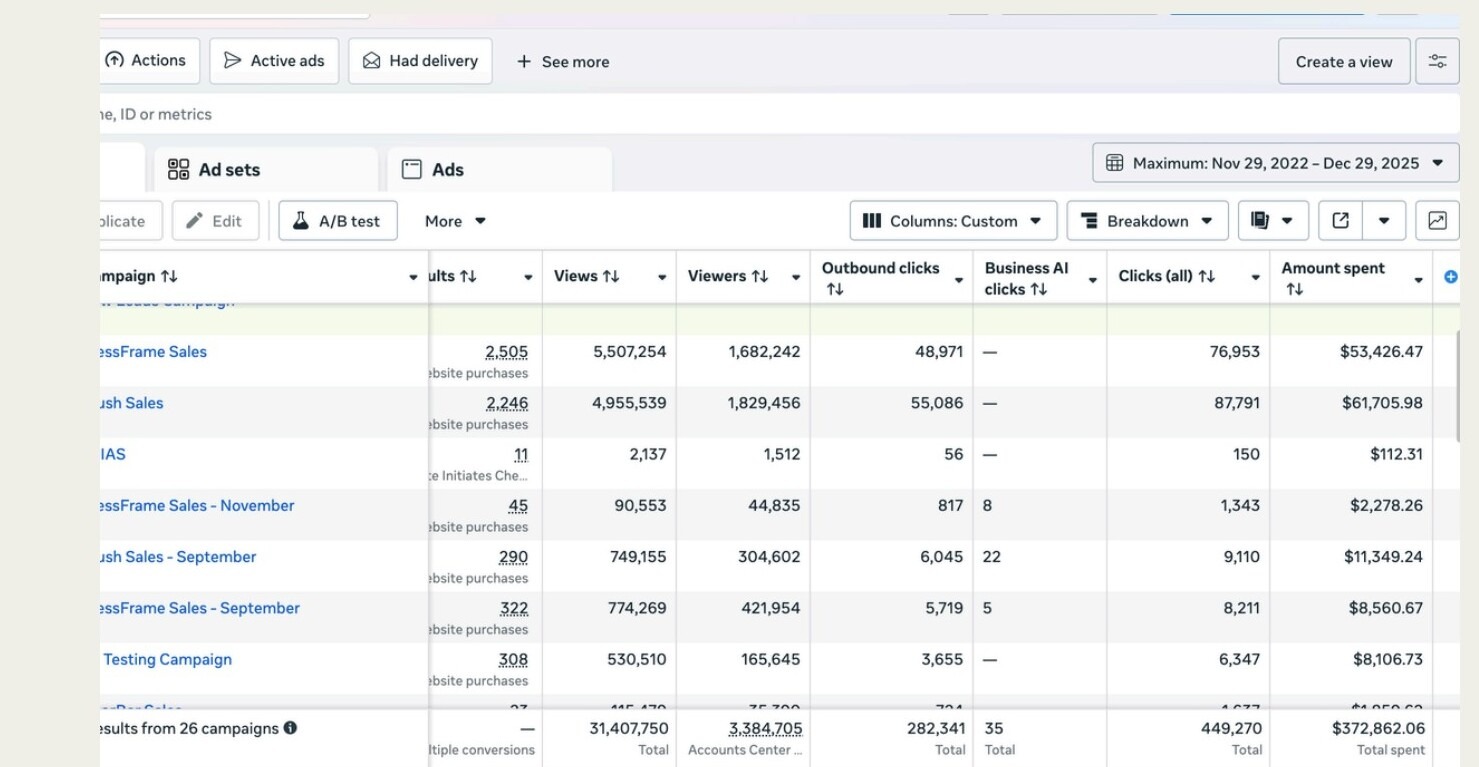
By the Numbers
This e-commerce campaign was built around one goal: drive purchases profitably and keep scaling what worked. From account reporting, the two primary sales campaigns produced:
- $294,871.93 in tracked purchase value
- 4,751 website purchases
- $115,129.80 in ad spend
- Around 2.56x blended ROAS
- $21 to $27 cost per purchase range on top-performing campaigns
That means the campaigns were not just generating traffic, clicks, or “brand awareness,” the sacred phrase marketers use when results are hiding in witness protection. They were producing actual tracked purchase value.
What We Were Up Against
E-commerce advertising is brutally competitive.
Most brands are not losing because their product is bad. They are losing because their ads look like every other ad, their testing is too slow, and their campaigns are scaled emotionally instead of mathematically.
The client needed a system that could increase purchase volume, keep customer acquisition costs under control, find winning creative angles faster, scale spend without destroying ROAS, and turn campaign reporting into clear decisions.
The market norm in e-commerce paid social is messy. Creative fatigue hits fast. Winning ads stop working. Costs rise. Audiences get colder as campaigns scale. The brands that win usually are not the ones with one “perfect” ad. They are the ones with a repeatable testing machine. That was the goal here.
How We Built the Campaign
Aggressive Creative Testing
The campaign needed enough creative volume to find winners. In paid social, especially for e-commerce, the creative is often the targeting. The right hook attracts the right buyer before they even click. We tested versions built around product value, offer strength, problem and solution angles, lifestyle use cases, direct response triggers, trust signals, and urgency. The goal was not to make ads that looked pretty in a portfolio. The goal was to make ads that made people buy.
Rapid Iteration on Winners
Once the account showed which ads were producing purchases at a reasonable cost, we moved quickly. Winning concepts were turned into new variations. Weak creative was cut. Strong performers were given more room to spend. This avoided one of the most common e-commerce mistakes: treating one good ad like it is immortal. It is not. Ads die. Humans get bored. Platforms shift. The internet remains a haunted casino.
Disciplined Scaling
A campaign can look strong at a lower budget and then collapse when spend increases too fast. We watched purchase value, cost per purchase, and ROAS together instead of obsessing over one isolated metric. The account produced a blended ROAS of about 2.56x across the two primary sales campaigns — revenue at scale while keeping acquisition costs within a workable range.
Reporting That Led to Action
The campaign was managed around decisions, not vanity metrics. We looked at which campaigns were driving purchase value, which ads were producing purchases, which cost-per-purchase ranges were scalable, which creative angles deserved more testing, and where spend should increase, hold, or pull back. Pretty dashboards are nice. Clear decisions are better.
Beyond the Numbers
The campaign generated 4,751 website purchases from two primary sales campaigns. That is not a soft lead. That is not someone filling out a form and disappearing into the void. That is purchase behavior.
The top campaigns delivered purchases in the $21 to $27 cost per purchase range, which is strong for many e-commerce accounts depending on product price, margin, and repeat purchase potential.
The bigger win was the structure behind the result. The campaign worked because there was a repeatable process: test creative, find winners, iterate quickly, scale with discipline, use reporting to make the next decision. That is how an e-commerce brand can move from “we are running ads” to “we have a growth system.”
What This Proves
With $294,871.93 in tracked purchase value, 4,751 website purchases, and a 2.56x blended ROAS from the two primary campaigns, the account proved that strong creative testing and disciplined scaling can produce measurable revenue.
Ready to Build a Paid Social System That Actually Sells?
Most brands do not need more random ads. They need a creative engine, a testing structure, and a scaling plan that does not light their budget on fire for sport. We help brands turn paid social into a measurable growth channel with creative, strategy, optimization, and reporting built around results.
Book a Free Strategy Call